Proposed NSPS Updates for Combustion Turbines: What Owners and Developers Should Be Watching
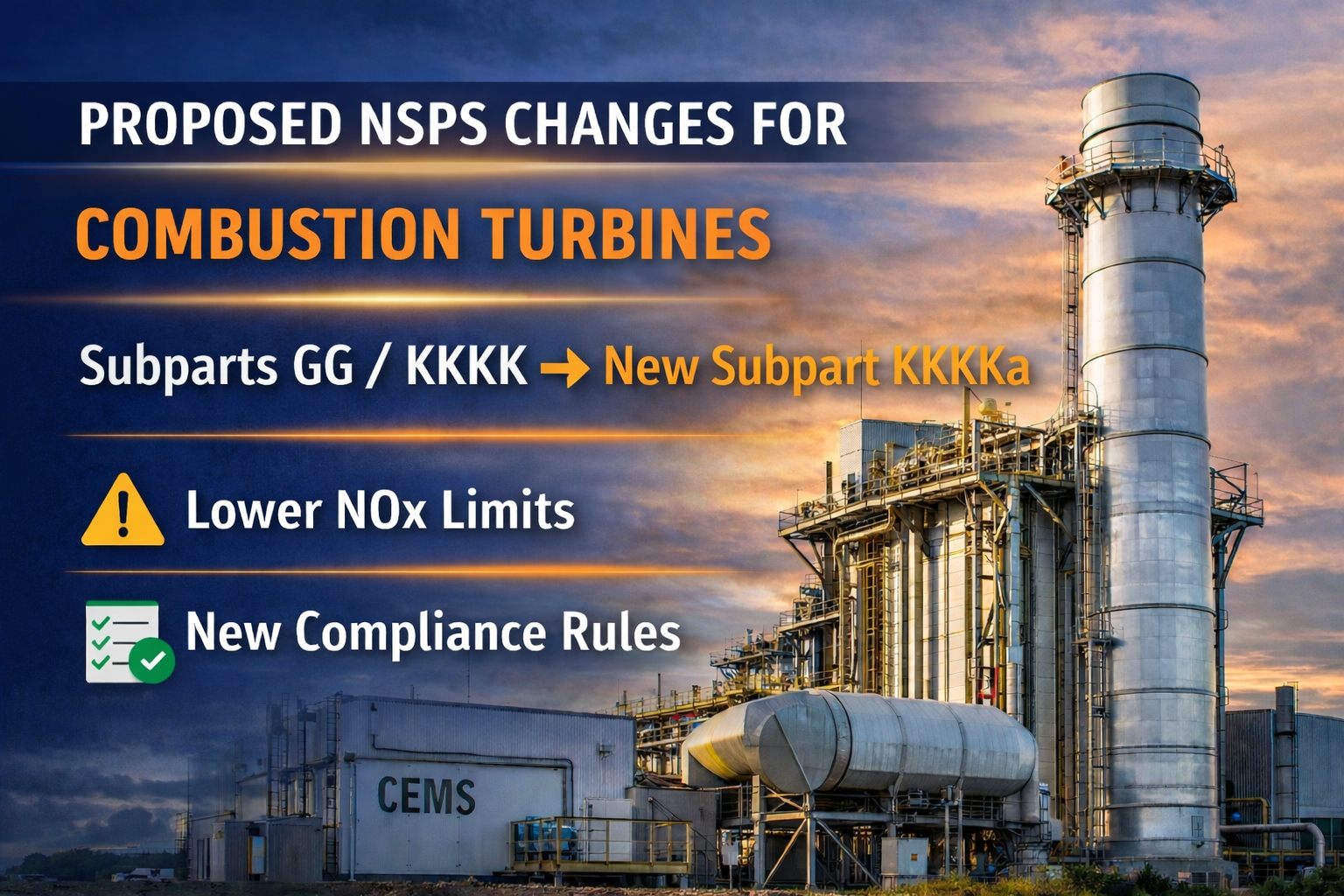
The U.S. EPA has proposed significant updates to the New Source Performance Standards for stationary combustion turbines. These changes would replace existing Subparts GG and KKKK with a new subpart, KKKKa, and would lower allowable NOx emission limits for many new combustion turbines. While the rule is still in the proposal stage, the direction is clear toward tighter emission standards, expanded applicability, and increased scrutiny of startup, shutdown, and low load operation.
For owners, developers, and operators of combustion turbines, particularly in the power generation and data center sectors, this isthe right time to understand what may be coming and how early planning can reduce cost and compliance risk.
What Is Changing?
Under the proposal, EPA would consolidate and update the existing turbine NSPS requirements into Subpart KKKKa. A central feature of the proposal is the lowering of NOx emission limits compared to current Subpart KKKK requirements, particularly for natural gas fired turbines constructed, modified, or reconstructed after December 13, 2024.
Key elements of the proposal include:
- Lower NOx emission limits under Subpart KKKKa for new combustion turbines, including combined cycle units and simple cycle peaking units
- Revised standards for startup and shutdown periods, which have historically been challenging from a compliance perspective
- More restrictive requirements at low load, affecting turbines that cycle frequently or operate to support renewable generation
- Expanded monitoring, testing, and recordkeeping expectations that may increase the need for continuous emissions monitoring systems or enhanced parametric monitoring
These changes reflect EPA’s conclusion that advances in turbine design and emissions control technology justify more stringent NOx standards.
Who Should Be Paying Attention?
The proposed Subpart KKKKa would primarily affect:
- New natural gas fired combustion turbines
- Turbines installed at data centers and industrial campuses
- Simple cycle peaking units and fast start turbines
- Projects undergoing major modification or reconstruction
- Facilities planning capacity expansions or repowering projects
Even facilities that believe they fall below traditional applicability thresholds should take a closer look. The lowered NOx limits and changes in how operating modes are defined could result in additional compliance obligations or design constraints.
Why This Matters for Project Planning
NSPS applicability is often determined early in project development, sometimes before detailed design is finalized. Once a project is committed to a regulatory pathway, changes can be costly and difficult.
Lower NOx emission limits under Subpart KKKKa may affect:
- Turbine selection and vendor emissions guarantees
- SCR sizing, catalyst life, and ammonia management strategies
- Startup and low load operating practices
- Stack testing frequency and compliance demonstration methods
- Permitting schedules and public review timelines
Understanding these impacts early can help avoid redesigns, delays, and unplanned compliance costs.
How Mostardi Platt Helps
Mostardi Platt works with combustion turbine owners, developers, and engineering firms nationwide to navigate evolving air quality regulations, from early project planning and permitting through compliance testing and ongoing reporting.
Our teams support clients by:
- Evaluating NSPS applicability under Subpart KKKKa during project planning
- Assessing compliance strategies to meet lower NOx limits across all operating modes
- Coordinating air permitting, dispersion modeling, and agency review
- Designing and implementing emissions testing and CEMS strategies
- Supporting long term compliance once units are operational
Looking Ahead
Although the proposed Subpart KKKKa is not yet final, it reflects a clear regulatory trend toward lower allowable NOx emissions from combustion turbines. Owners and developers with projects on the horizon should monitor this rule closely and consider its implications for both near term permitting and long-term operations.
If you would like to discuss how the proposed NSPS updates could apply to a specific facility or project, early planning can make a meaningful difference.